

Less Asphalt. Better Streets.
It’s proven that greenery helps make our cities more sustainable. But we can’t rely on cities alone to mitigate climate change. Homeowners and business owners are also part of the solution. And taken together, some of the most impactful changes can happen on private land.
Let me ask you a question. What if we could reduce the amount of water going into our sewers and soften how our streets feel at the same time? That’s exactly what this article is about.
Let’s start with driveways.
That stretch of asphalt in front of two-car garages in so many suburbs is more than just an eyesore. Most driveways are harder than they need to be. They make surroundings feel harsher. They trap heat in the summer. And because they’re sealed, they don’t absorb water.
Five years ago, when we redid our parking space, we chose green pavers instead of traditional asphalt. Since then, something unexpected keeps happening. Residents stop during their stroll to take a look. They ask questions. Some even take notes.

It’s a small change, but it gets noticed. Not because it’s flashy, but because it softens the space. It feels more natural. It looks better than asphalt. Honestly, it’s way better than the most expensive paver jobs. What I’ve realized is that most people become interested once they see it. Before, they just didn’t know it was an option, or they assumed it was complicated or expensive to install and maintain.
In reality, green pavers now come in a wide range of styles and price points, with many options made in Quebec. Maintenance is minimal. Every now and then, you might need to reseed a few patches, but that’s about it. Snow removal hasn’t been an issue either—my snow removal team doesn’t mind it at all.
What I appreciate most about our green parking is knowing that my land absorbs rain instead of sending it straight into a sewer system already at overcapacity.
If you work in landscaping, urban planning, or at a permit office, you can play a role here. Suggest green pavers for parking. Show examples. Make it easier for people to install them.
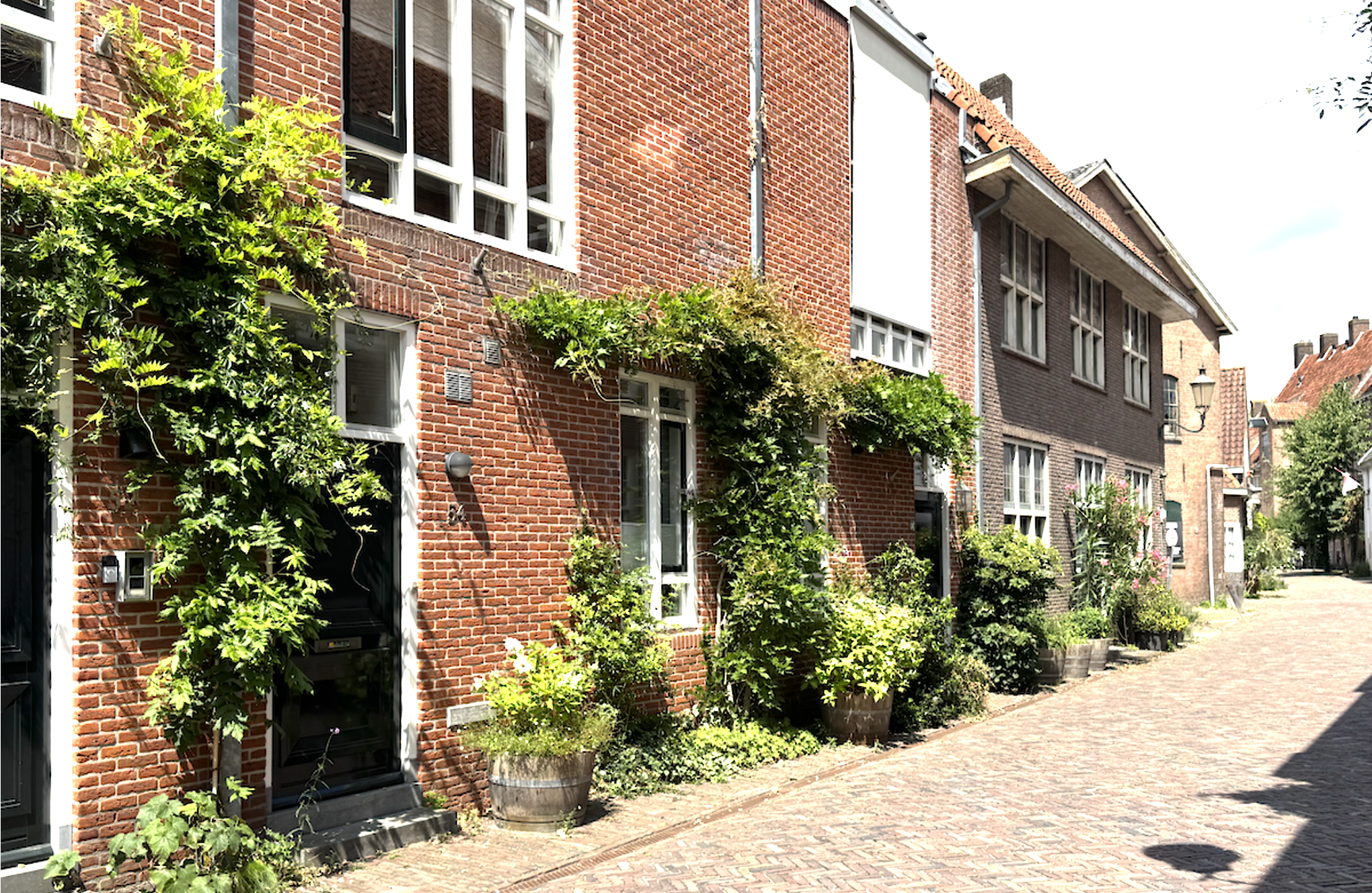
The second idea is even simpler. I started noticing it during a trip to Europe last summer. In many cities, people have reclaimed small strips of land along the front of their buildings to grow plants. Sometimes it’s just a foot or two. But adding greenery next to their front door breaks up the stone and pavement. That small addition changes how the street looks and feels.
It made me realize how much of a difference a few small actions can make. When you remove a bit of pavement and replace it with plants, the street immediately feels softer, calmer, more inviting.
This is part of a broader movement often referred to as unpaving, depaving, or desealing. It’s gaining momentum in different parts of the world, from Ontario to Portland, to cities like Leuven and across the Netherlands.
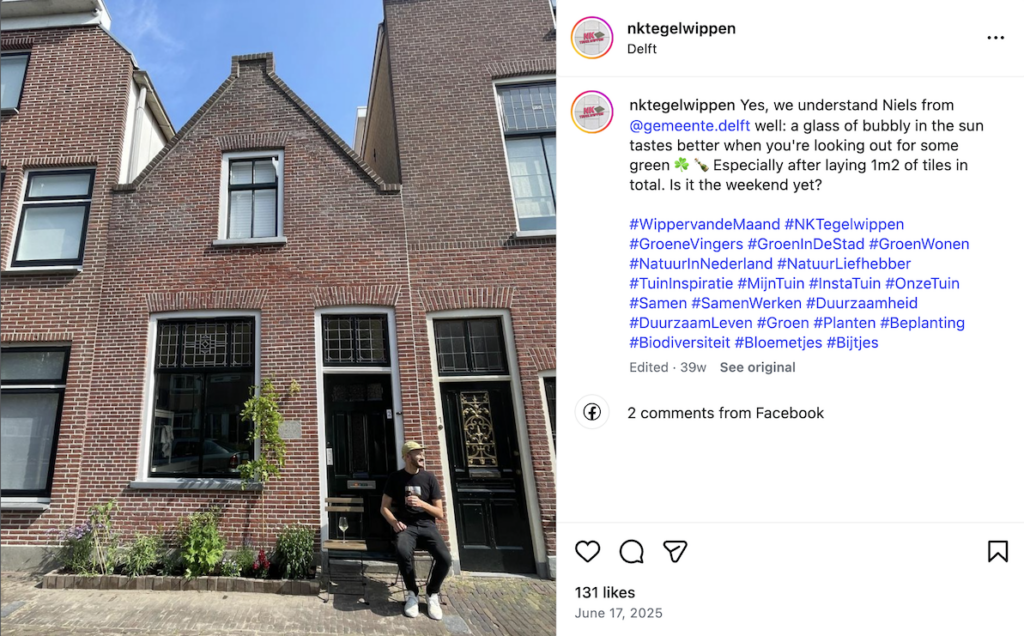
In the Netherlands, this idea has even turned into a light-hearted national competition called NK Tegelwippen. The goal is for encouraging residents to replace garden tiles with greenery to boost biodiversity, improve water drainage, and cool cities. The participating cities compete to turn as many paving tiles as possible into green spaces. In 2024 alone, more than 5.5 million tiles were removed. That year, the city of Venlo, with about 100,000 residents, won that friendly contest. Some cities even offer “tile taxis” that pick up the removed pavers for free and deliver plants in return. It lowers the barrier to participation and makes it easy for residents to take part.
These simple initiatives don’t require massive budgets. They rely on coordination, incentives, volunteering, and broad participation. Cities can support them, but most of the work is done by volunteers.
As spring and summer approach, I want to encourage homeowners, businesses, and local organizations to be part of the effort—to help beautify and cool down our neighbourhoods, one surface at a time.
We tend to think of streets as shaped by public authorities. But a surprising part of them isn’t. It sits on private land—in driveways, front yards, and along the edges of buildings. Change those surfaces, and the street changes with them.
